Service · Web design and development
Web design and development
We design and build websites for nonprofits, NGOs and institutions, as well as companies and individuals. We work out how to explain what the organization does, publish it in the languages it needs, and hand it over documented, so it can be maintained. The same people design and build it, so nothing decided in the design gets lost in the code.
When you need it
When the website no longer represents the organization.
It doesn’t work on a phone. A fixed-width site forces people to zoom in on the device where many of your visits now happen.
Each language is a half-finished copy. Pages that exist in one language and not in another, or translations nobody kept up to date.
Search engines don’t understand what the organization is. The site’s structure and data need a review to help search engines understand its work.
The published website doesn’t reflect the approved design. The implementation differs from what was agreed and needs a joint design and development review.
UX/UI
Structure first, screens second.
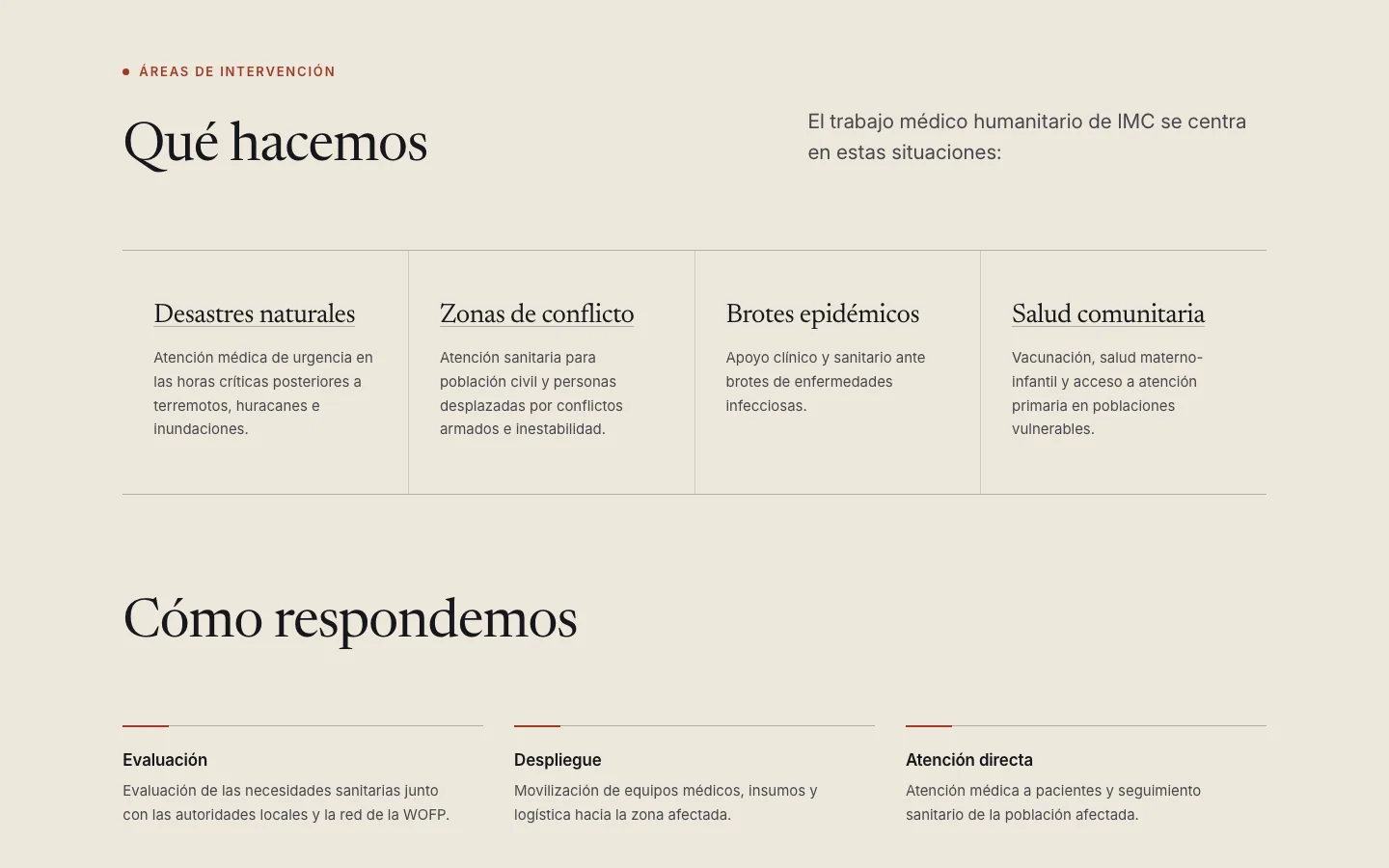
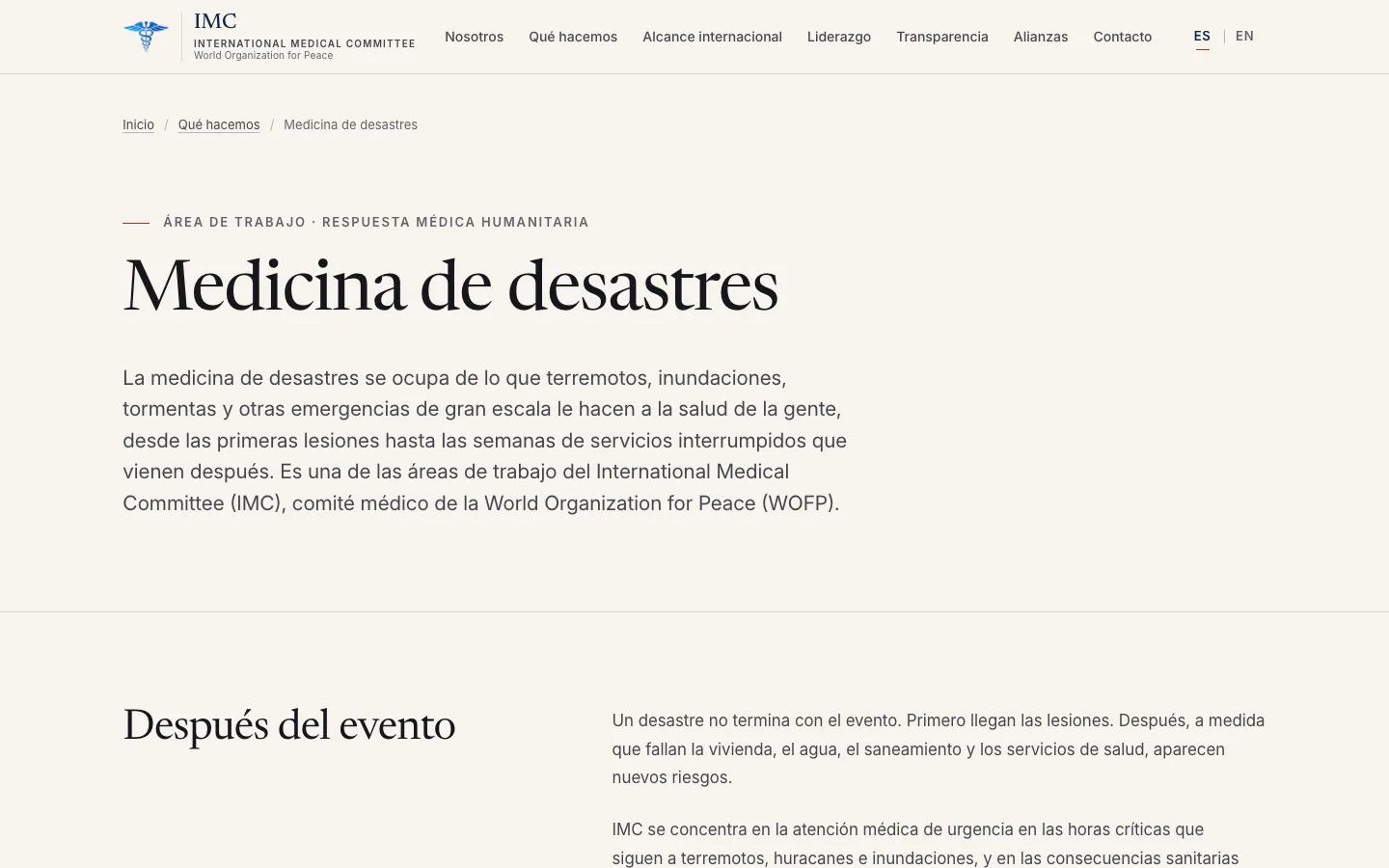
Before designing a single screen we organize the content: which pages are needed, in what order, and what each visitor is looking for when they arrive. For the International Medical Committee website, that meant one page per area of work instead of a home page trying to cover everything.
How we work
Five stages, one team.
Diagnosis
What the current site has, what gets used, what people search for and in which languages.
Architecture
The page map and the address of each page, in every language.
Interface
Design of the key screens, for mobile and desktop.
Development
Lightweight code, custom-written in most projects.
Validation
Before launch we check links, languages, search engine data, contrast, and use with a keyboard and on a phone.
What’s included
What we deliver.
- Information architecture and site map.
- Interface design for mobile and desktop.
- Front-end development.
- Language versions, each with its own addresses and the signals search engines use to keep them apart.
- Structured data, so search engines understand what the organization is.
- Accessibility review and site speed.
Where you can see it
Websites in one, two and four languages.
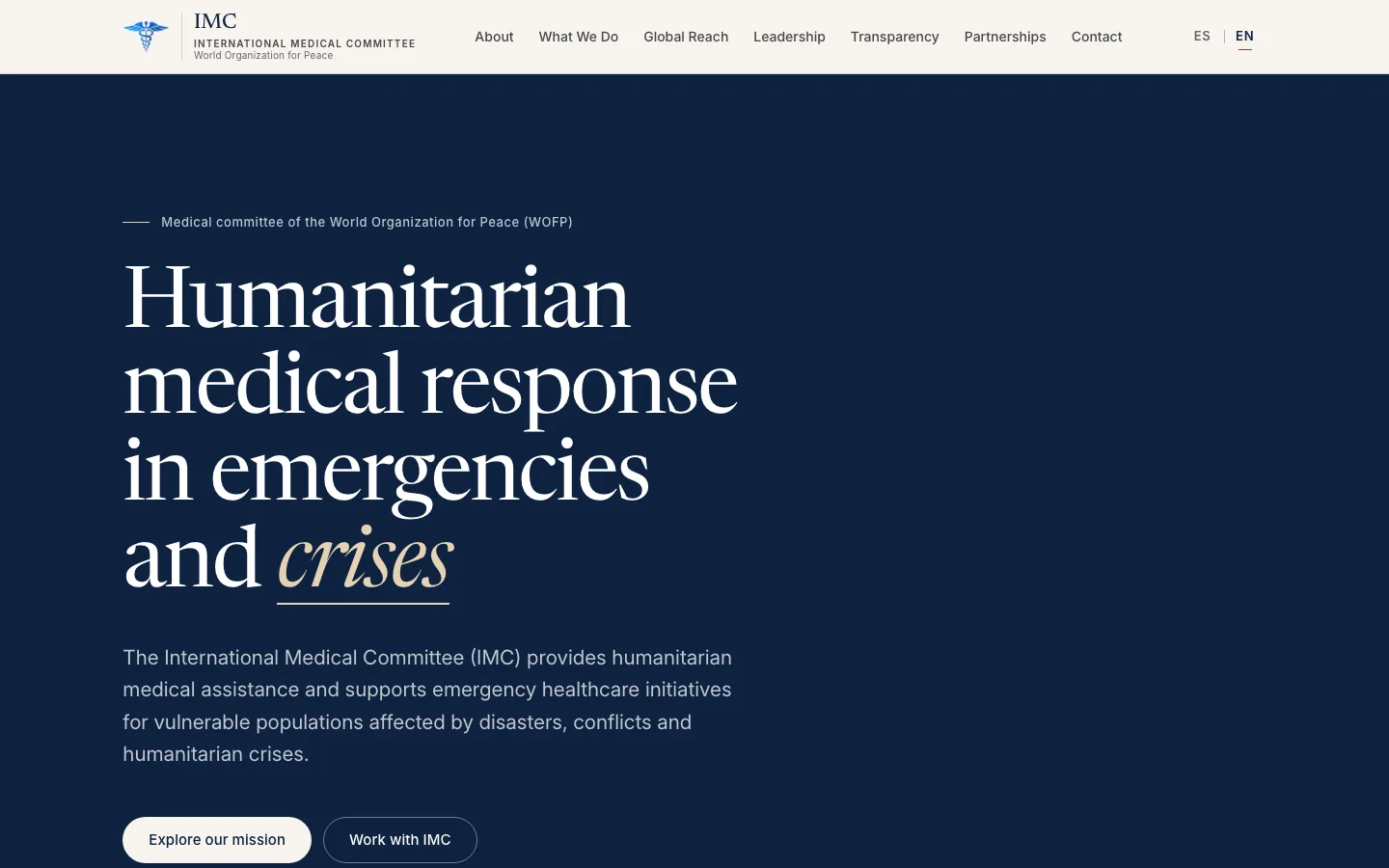
- International Medical Committee · 2026
- 2 languages · 14 pages in each · see the case study
- OMPP · WOFP · since 2005
- 4 languages · more than 650 pages · see the case study
- insidewish.com · 2026
- 2 languages · the site you are reading
The difference
A website designed together with the brand.
When we also make the brand, the website is its first real application: typeface, color and tone are tested where most people will see them. And because the same team designs and builds, nothing gets lost between one stage and the next.
Which website do you need to sort out?
Tell us what you have today, in which languages, and who visits it. That’s where we start.